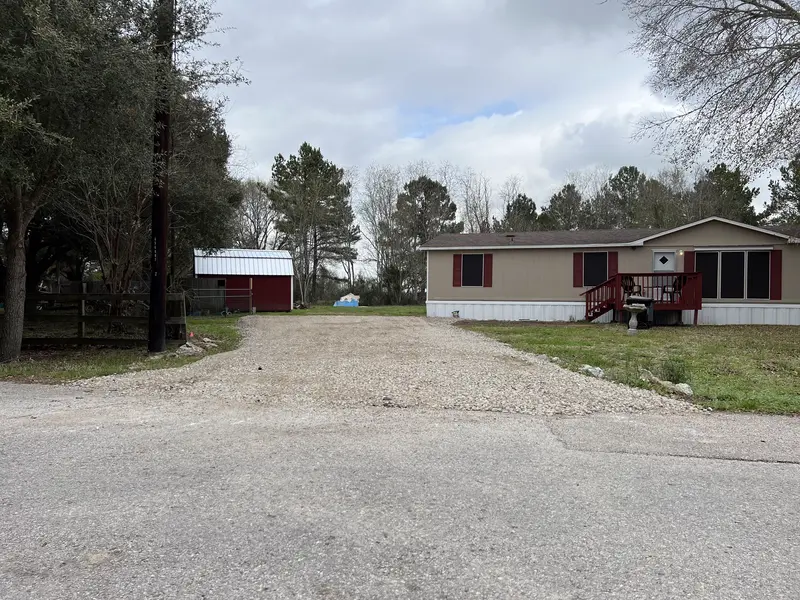
Short answer: both work, and around here they are the two materials we put down most. Crushed concrete is the one you pick when you want a lane that drains and locks up hard under trucks. Milled asphalt is the one you pick when you want something dark, low on dust, that packs closer to pavement the longer it is driven on.
The longer answer is about what is under it and where the water goes, because that decides how the driveway looks in three years far more than which rock you chose.
What each one actually is
Crushed concrete is exactly what it sounds like. Old slabs, curbs and foundations get broken up, crushed and screened into an angular base rock with plenty of fines mixed in. Those fines are the point. Under tire traffic the sharp pieces wedge against each other and the fines fill the gaps, so the surface tightens up instead of rolling around the way smooth gravel does. It costs less than new rock because it is recycled, and it is the base we lean on for a driveway, a parking area or a ranch road that has to work in wet weather.
Milled asphalt is reclaimed pavement. When a road gets resurfaced, the top layer is ground off and hauled away as millings. Those millings still carry the old asphalt binder. Spread them, roll them, and let heat and traffic work on them for a season, and they knit back into something close to a solid surface. Rain sheds off it rather than soaking in, and a truck can roll in without dusting out the house.
How they behave in the weather we get
Crushed concrete drains. Water moves through it and off it, which is why it holds up on a lane that stays wet through the winter. The trade is that it stays a light gray and it will dust in a long dry spell.
Milled asphalt sheds water instead of passing it through, and it stays dark. The trade there is that it needs heat and tires to finish the job. Millings that go down in a warm month and get driven on tighten up quickly. Millings laid in cold weather sit looser for longer, until the first stretch of hot afternoons and steady traffic packs them in. That’s worth knowing in September, because the afternoons are still hot enough to help.
Either way, the first few days matter. A freshly spread lane is loose until it is rolled, and rolled isn’t the same as finished. Drive it, let it settle, and expect a touch-up pass to be part of the job rather than a surprise.
Which one fits which driveway
Pick crushed concrete when the lane is long and low, when trucks and trailers will use it, when part of it stays wet, or when you want a base you can build on later. It is also the honest choice when the budget is tight, because it does the most work per load.
Pick milled asphalt when the drive is in front of the house and you care what it looks like, when dust is the complaint you are trying to solve, or when you want the closest thing to a paved surface without pouring one.
Plenty of properties end up with both. Crushed concrete on the working stretch back to the shop or the barn, millings on the piece the front door sees. Nothing wrong with that.
What has to be true underneath, either way
This is the part people skip, and it’s the part we look at first on the walk-through.
A firm base. Material spread over soft ground, or over the old topsoil, sinks. The good rock pushes down into the mud and the mud comes up between it. On a bad spot that means cutting out the soft material and building back up with something that compacts, the same way a house pad gets built. If you want the long version of why, the house pad guide covers what compaction actually means.
A crown, and somewhere for water to go. A driveway that is flat across its width holds water in the wheel ruts, and a wheel rut full of water is how potholes start. The surface should be a touch higher in the middle than at the edges, and the edges need to shed into a ditch, a swale or open ground that falls away. Where a drive crosses a ditch or ties into a road, that is a culvert, and it has to be sized so it doesn’t back water up on your neighbor.
Contained edges. Both materials want to walk sideways under tires if there’s nothing holding them. A lane built a little wider than it needs to be, with the shoulders graded to support the edge, keeps its shape a lot longer than one squared off against soft grass.
Before the truck comes
Three things save everyone a trip. Know where your property line is, so the drive goes where it is supposed to. Call 811 before anything gets dug, and mark your own lines too, the septic and the sprinkler heads. And if the drive meets a county-maintained road, check with your county precinct office first. In Montgomery County the precinct that maintains the road is the one that handles driveway culverts, and they will tell you what they need to see before you tie in.
Make sure a loaded dump truck can clear your gate and turn where it needs to. That’s the one that gets people.
When to call us
If you have a lane that has gone to mud, a new house going up with no way in, or a driveway that dusts out the porch every time somebody pulls in, we can look at it. Our materials come on our own trucks, and the same crew that hauls the load can grade the base, spread it and roll it. For a driveway we come walk it before we quote, so the soft spots and the drainage get found before the rock does.
Tell us what you are building and where the water goes now, and we will tell you straight which material it needs. Ask for a delivered price or call (832) 704-1783.